Southern Ocean
The Southern Ocean (also known as the Antarctic Ocean) is the ocean that surrounds Antarctica, the coldest continent on Earth. Its waters are very cold, and much of the area is covered by floating sea ice during parts of the year. Even in this icy place, many animals live and find food. Penguins, seals, whales, fish, and tiny creatures called krill are all part of the Southern Ocean's ecosystem. Huge icebergs float through its waters, and strong winds can create some of the roughest waves in the world. The Southern Ocean is a wild and amazing place where animals must find special ways to survive in the cold.
General Geography & Location
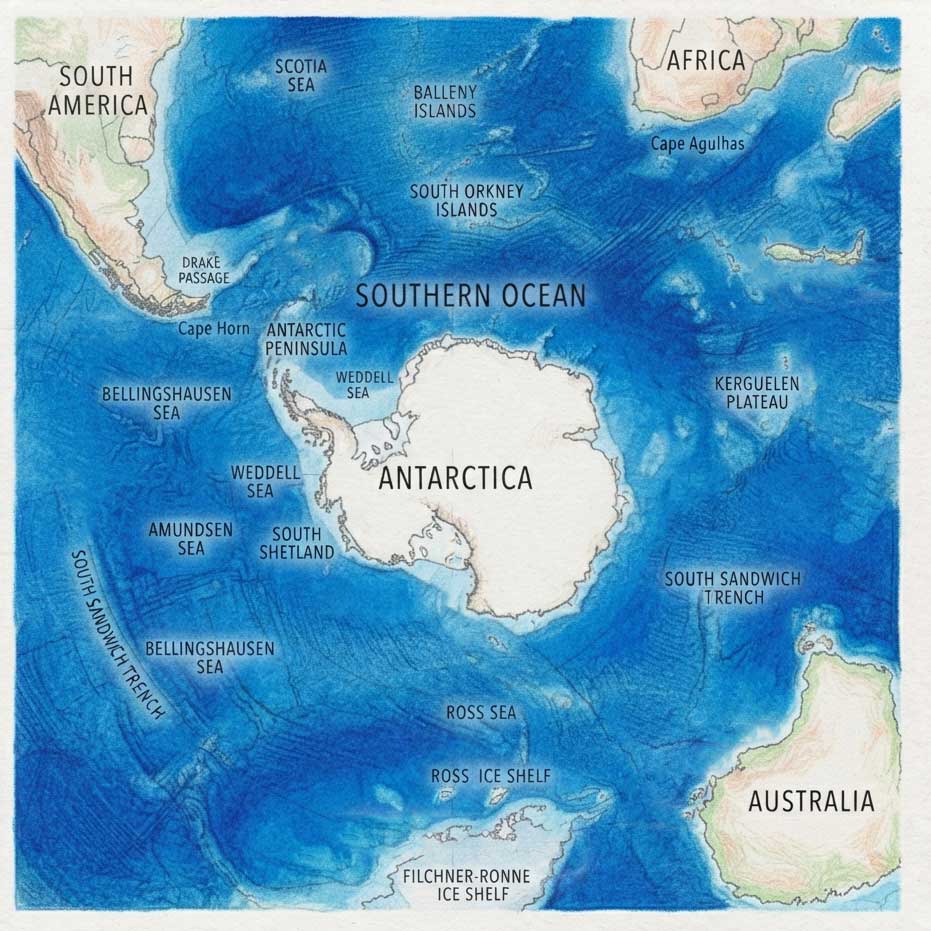
The Southern Ocean surrounds Antarctica and is the southernmost ocean on Earth. It is the fourth-largest of the world's five oceans, covering about 7.8 million square miles (20.3 million square kilometers). It connects the Atlantic, Pacific, and Indian Oceans and forms a ring of cold water around Antarctica. Unlike other oceans, the Southern Ocean is known for the strong currents that flow around the continent.
One of the most important features of the Southern Ocean is the Antarctic Circumpolar Current. This powerful current flows all the way around Antarctica without being blocked by land. It moves huge amounts of water and helps keep the Southern Ocean cold. It also helps move heat and nutrients around the planet, making it important to Earth's weather and climate.
The Southern Ocean is filled with icebergs, which are large pieces of ice that break away from glaciers or ice shelves and float in the ocean. Some icebergs are small, while others can be as large as a city. Most of an iceberg is hidden below the water, making it much bigger than it looks from the surface. The ocean also has floating sea ice that forms when seawater freezes during the cold winter months.
The Southern Ocean is one of the coldest and roughest oceans in the world. Strong winds and large waves can make the water dangerous for ships. During the summer, there is much more sunlight, while winter brings long periods of darkness. These changing seasons affect the ice, the water, and the animals that live in this region.
Natural Habitats/Ecosystem
The Southern Ocean may seem like a place with very little life, but it is home to many amazing animals. Penguins live along the Antarctic coast and depend on the ocean for food. Seals spend much of their time swimming and hunting in the water, while whales travel through the Southern Ocean to feed. Many fish and other sea creatures have special ways of surviving in the cold water.
One of the most important animals in the Southern Ocean is krill. Krill are tiny, shrimp-like animals that live in large groups. They may be small, but they are an important source of food for many animals. Penguins, seals, fish, and some of the largest whales in the world eat krill. Without krill, many animals in the Southern Ocean would have trouble finding enough food to survive.
The Southern Ocean also has life in places where sunlight cannot reach. Tiny organisms grow in the water and provide food for other animals. Deep below the surface, fish and other creatures live in cold, dark waters. Some animals have special body features that help them survive the cold, while others have ways of finding food in a place where meals can be hard to find.
The Southern Ocean is important to the entire planet. Its cold water helps move heat around the Earth and plays a role in keeping our climate balanced. It also helps store carbon, which is important for the air and climate. However, warming temperatures can change the amount of sea ice and affect the animals that depend on it. Protecting the Southern Ocean helps keep its habitats healthy and supports the wildlife that lives there.
Conclusion
The Southern Ocean is a cold, wild, and amazing place that surrounds Antarctica. Its waters are filled with icebergs, sea ice, powerful currents, and animals that have learned to survive in extreme conditions. From tiny krill to huge whales, every animal plays a part in keeping this ocean healthy. The Southern Ocean is important to wildlife and to the Earth's climate, making it a special place worth learning about and protecting.
Other Continents and Locations
There are more locations to explore. See other locations where our animals live.
Animals found in Southern Ocean
Click on an image to learn more about one of the animals.
